

Organic right from the start – From breeding to the end product.
Where does organic start?
According to the definition of the EU Organic Farming Act, organic seed must be used for organic farming. In most cases, this seed comes from conventionally bred varieties and has only been propagated for one generation under organic conditions. That is not enough! We are of the opinion that organic must start earlier, namely at the breeding stage.
What means organic breeding?
Bio-Züchtung develops open-pollinated organic varieties for the special requirements of organic farming using methods and techniques that are compatible with the principles of organic farming – without genetic engineering!
What is bioverita?
bioverita …
- is a non-profit organisation
- brings together the leading organic breeding initiatives in Europe
- provides lists of varieties from organic breeding that meet bioverita’s definition of organic breeding.
- raises awareness of organic breeding
- collaborates with partners from the fields of breeding, the seed trade, agriculture, nursery businesses, wholesale, direct marketing, the organic food trade and processing businesses within the organic sector to raise awareness of the varieties and promote their cultivation.
Independence from conventional breeding
At present, the organic sector is heavily reliant on varieties derived from conventional breeding. With the deregulation of new genetic engineering techniques, which comes into effect from mid-2028, more and more new varieties will be genetically modified and therefore unsuitable for organic farming.
By using organically bred varieties and purchasing products made from them, you are supporting the independence of organic farming.
Would you also like to get involved in organic breeding? Then get in touch with us.

- Cooperation with Plant Nursery
 The organic nursery Watzkendorf for years has placed particular emphasis on pure line varieties. They have also included varieties from organic breeding for many years. In December 2020, the nursery concluded a user agreement with bioverita. This opened the way for adding certified varieties to their product list using the bioverita label to draw the ...
 - Cultivation of Open Pollinated Varieties
 The Pulvermühle farm in Volgelsheim in Alsace has been managed by the Schmidt family for six generations. For more than 50 years they have cultivated organic vegetables and cereals on approximately 115 hectares of land, among other things selling into the German and Swiss markets. Wholesale partner Rinklin Naturkost from Kaiserstuhl is also one of ...
 - Film worth seeing!
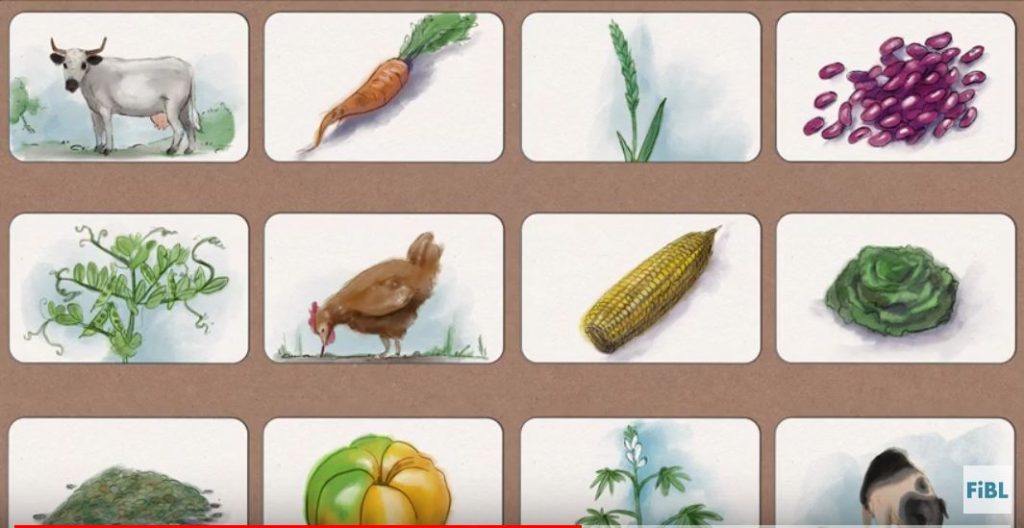 Did you know that most of our dishes today are based on no more than nine plant and five animal species? One of the many reasons why we need comprehensive support for organic breeding. A new film from FIBL and the European project Engagement.Biobreeding clearly shows the correlations: https://youtu.be/_o31AZM-mes
 - Strategies to communicate the benefits of organic breeding
 There are many good reasons for organic breeding! But the correlations are complex and often difficult to grasp for end users. How do you best master the challenge of bringing the topic to the general public? This is what the FIBL online workshop will be about on February 18, 2021 as part of the digital ...
bioverita sees itself as a counterbalance to genetic engineering and the consolidation in the seed industry with fewer and fewer suppliers. The range of organic varieties for organic farming must therefore be increased.
bioverita is always about organic breeding – whether that is vegetables, cereals or coming soon, apples!