Breeder portrait Frans Carree
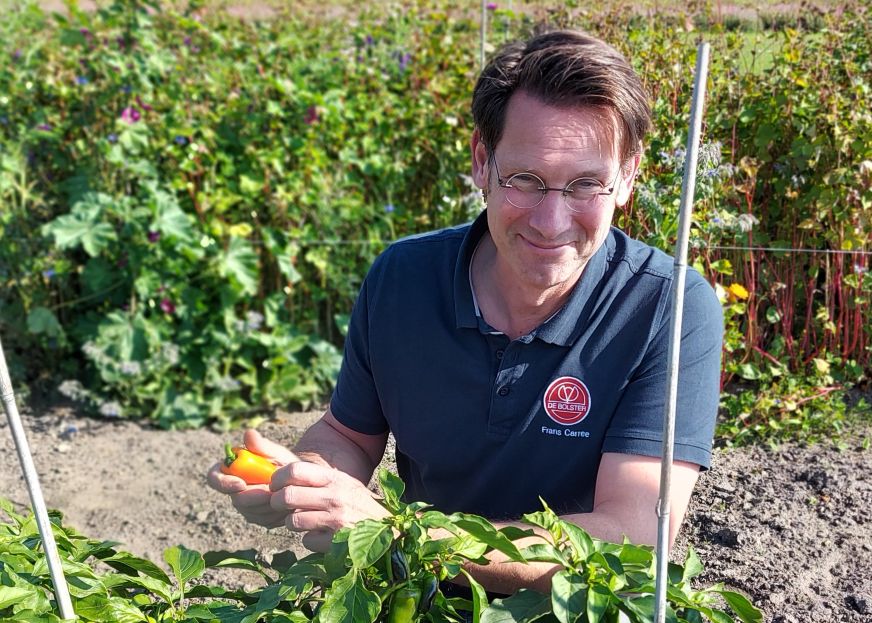
“I’ve always been interested in research, developing things and being creative. All of that comes together in plant breeding,” says Frans Carree (born in 1974), summarising his work. He works for de Bolster, the only major seed company in the Netherlands that operates entirely on certified organic land – both in breeding and in seed production. De Bolster has been a member of bioverita since 2024.
Carree, who after completing his degree in ‘Research and Breeding’ initially worked for the conventional breeding company Rijk Zwaan, has come to greatly appreciate the focus on organic farming: ‘I didn’t realise beforehand just how different it is to work in the organic sector. The companies here work much more closely together. What’s more, their focus is on doing good for the planet rather than breeding the best variety for maximum yield,” he concludes.
Breeding under organic conditions
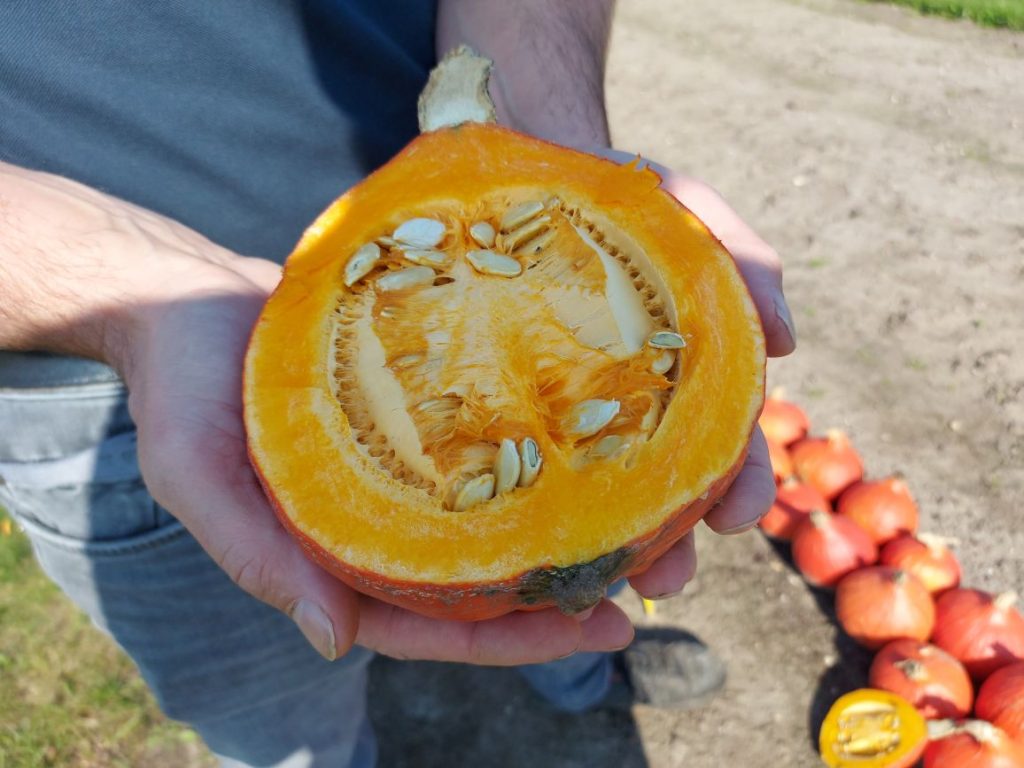
Carree has been working at de Bolster since 2017. In his early years there, he worked closely with Bart Vosselman, who had made a name for himself since the 2000s by breeding new pumpkin varieties. His open-pollinated Hokkaido Fictor (bioverita-certified) remains popular with growers because it has a particularly long shelf life. In 2007, he took over the organic seed company De Bolster in Kielwindeweer together with his sons Frank and Patrick Hoogendoorn. Vosselmann, now in his mid-70s, has since handed over the running of the business to his sons, but is still active in breeding. Meanwhile, Carree has taken over the management of the breeding team at de Bolster. Since then, the department has grown to nine people.
“But I don’t just want to be a manager. It’s important to me to get my hands dirty with the plants. I enjoy being in the greenhouse and out and about. After all, I need to get a sense of what the growers need,” he emphasises. He criticises the fact that conventional farms only test their varieties under organic conditions once they are already on the market. “But it makes a huge difference whether something has been bred under organic conditions from the outset, without the addition of fertiliser and with minimal irrigation,” he is convinced.
Fungal diseases adapt – and so does breeding
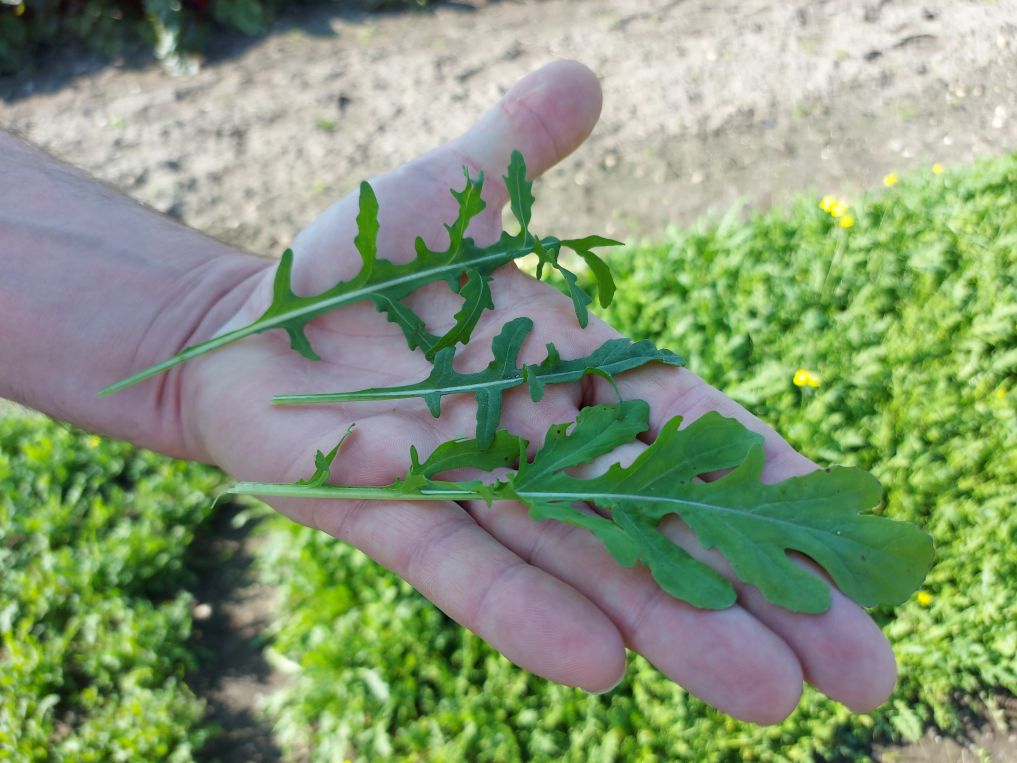
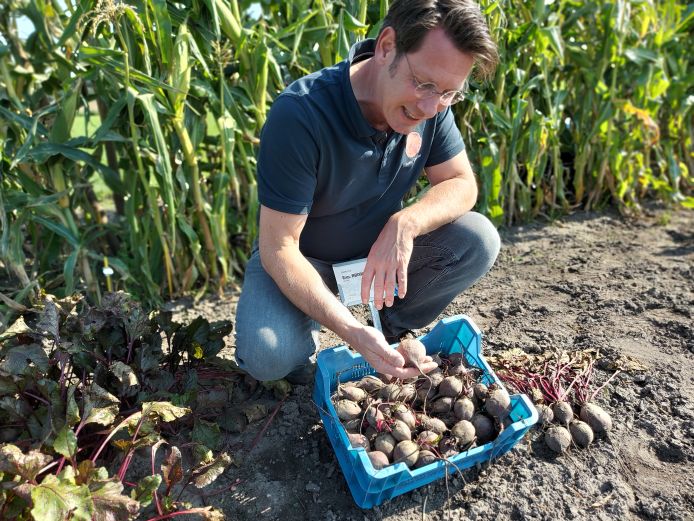
De Bolster has a number of hybrids in its range and is also working on rootstocks for peppers, tomatoes and cucumbers, which, unfortunately, have so far only worked as hybrids. “When it comes to rootstocks, we need the hybrids to combine different resistances. This wouldn’t be possible with open-pollinated varieties alone, because the resistances are located on a single section of the gene,” explains the researcher. At the same time, however, the company is working with conviction on new open-pollinated varieties, including beetroot, Swiss chard and rocket. Only open-pollinated varieties can be certified by bioverita. For beetroot, work is underway on a new open-pollinated variety resistant to Rhizomania. Two rocket varieties resulting from Carree’s breeding work have already been registered and are also bioverita-certified: Roxanne and Rochelle.
Both varieties are relatively bolting-resistant and produce a good yield. Above all, however, both have been bred for resistance to downy mildew (Peronospora parasitica). This fungal disease causes brown-black spots on the leaves. The fungus is everywhere, and thrives particularly well on cold, wet nights followed by warm afternoons. “In Europe, the resistance in the varieties has held up quite well so far. However, by 2025 we were already observing some infestation. We expect that resistance will be broken in the foreseeable future,” reports Carree. So the work continues to find a new resistance. Is that frustrating? “Yes, you’re never finished, but that’s also what makes it interesting,” assures the breeder, beaming as he speaks.
Breeding objectives for sustainable cultivation
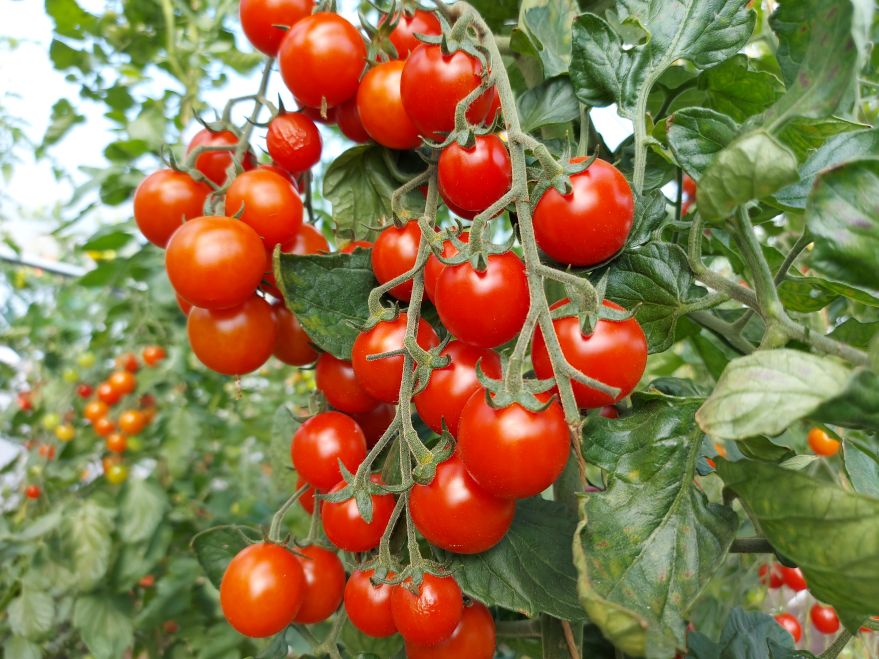
De Bolster aims to offer a wide variety of options, both for professional growers and for home gardens. That is why, among other things, work is being carried out on tomatoes of various colours and shapes. They should offer good flavour and good growth, whilst at the same time – and this is very important – exhibiting resistance to the fungal disease Phytophthora infestans, the dreaded late blight. Carree shows a strikingly vigorous tomato plant grown outdoors which, experience has shown, can be harvested until November thanks to its resistance.
“At the moment, we’re not yet able to produce open-pollinated tomatoes that yield as much as hybrids,” says Carree, “but I believe we can improve on that.” The breeder aims to ensure that the plants grow vigorously on a rootstock without grafting and require little fertiliser and water. Several new open-pollinated tomatoes have already been registered. Further breeding projects are underway, such as one for a new round tomato variety whose fruits do not burst when left on the vine for longer.
Patents are a growing challenge
He then highlights a problem that is increasingly concerning many organic growers: “Our new tomato varieties must be resistant to the Jordan virus. However, 25 different companies have filed patent applications for various gene segments relating to this resistance. So we have to work out exactly which resistance we need and who we have to pay for it. That makes it very complicated,” explains Carree. Although the patenting of plants and animals is explicitly excluded from the European Patent Convention, according to the NGO No Patents on Seeds, more than 1,000 conventionally bred plant varieties are already affected by European patents.
This effectively undermines the so-called ‘breeder’s privilege’, which allows breeders to use any available variety for the further development of plants. Carree believes that small companies such as de Bolster are at a distinct disadvantage in this regard, as they cannot afford their own legal department to handle patent issues and potential legal disputes.
Breeding supported by a broad base
On average, it takes ten years before a new variety can be registered with the Plant Variety Office. Breeding is therefore a long-term investment, and a variety initially incurs costs for many years before it can generate any revenue. de Bolster finances its breeding work exclusively through seed sales, as it is difficult to secure bank loans for this purpose. In order to remain independent of major investors in the future, the company established a cooperative in 2022.
Within a short space of time, 1,000 members had signed up, including businesses as well as many private individuals who support de Bolster. There was also considerable interest in the bonds issued – that is, shares in de Bolster sold with interest – and the subscription period was closed after just two weeks due to high demand. “This is a positive and important sign,” says Carree. “Not only for de Bolster, but also for the development of new, reproducible varieties, particularly for organic farming.”
Photo credits: bioverita