Meeting point Organic breeding – “Worth its weight in gold for the industry”
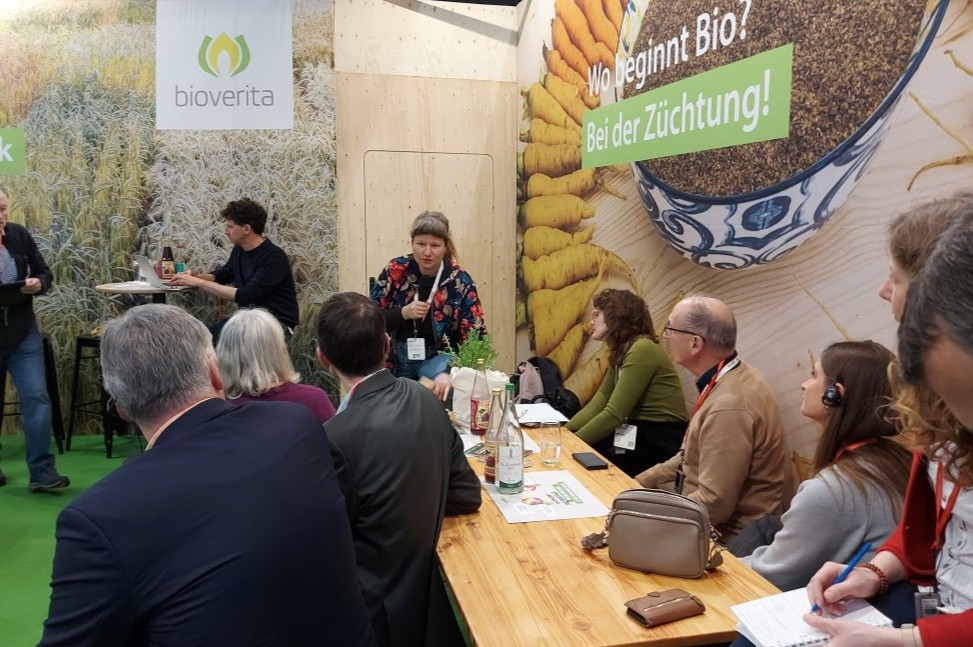
An inviting stand with a warm, green aesthetic, packed with expert knowledge and information tailored to all levels of expertise, lively discussions amongst attendees and a well-rounded programme of talks – this sums up the ‘Meeting Point Organic Breeding 2026’. Following the special exhibitions on organic breeding in 2018 and 2019, bioverita organised ‘The Hub for Organic Breeding’ at BIOFACH, the world’s largest organic trade fair, for the sixth time in 2026.
The stand is conceived as a major collaborative project: alongside the co-exhibitors – Dachverband Ökologische Pflanzenzüchtung in Deutschland e.V. (Umbrella Organisation for Ecological Plant Breeding in Germany), Kultursaat e.V. and Ökologische Tierzucht gGmbH (ÖTZ) – many other organisations and companies contributed both financially and in terms of manpower to the stand’s realisation, helping to make it a vibrant hub.

The GMO deregulation is casting a shadow
The final decision on the new EU regulation on genetic engineering has not yet been made. Nevertheless, the uncertainty surrounding the implications for the organic sector was clearly palpable at Biofach. A host of unresolved questions hang over the organic sector: How can organic produce remain GMO-free? What costs will organic producers face if, in future, they are required to prove that their products do not contain genetically modified organisms? To what extent will organic breeding be restricted if genetically modified plants are subject to patents in the future?
But also: will there be a boost for organic produce once consumers realise that, in future, only organic food will guarantee that it is GMO-free? After all, there are no plans to introduce mandatory labelling for products made from genetically modified plants. For the organic sector, however, one thing is clear: no GMOs on our fields or on our plates!
The first genetically modified foods could soon be coming onto the market
In addition to numerous discussions at the Meeting point Organic breeding, several events held as part of the Biofach Congress also addressed the topic. At the event ‘New genetic engineering – how do we safeguard GMO-free breeding and, with it, the entire supply chain?’, held on the Thursday of the fair, Gebhard Rossmanith from the Umbrella Organisation for Ecological Plant Breeding made it clear: “If the cultivation and processing of genetically modified plants are approved in the near future without risk assessment and labelling, the first genetically modified foods could enter the European market as early as 2028.”
Accordingly, it is imperative that every single company in the organic sector understands that the priority right now is to safeguard its own GMO-free supply chains – and thus to ensure the survival of its business. The entire sector must now wake up to this reality, and end consumers must be informed about what lies ahead.
Organically bred varieties as part of the solution
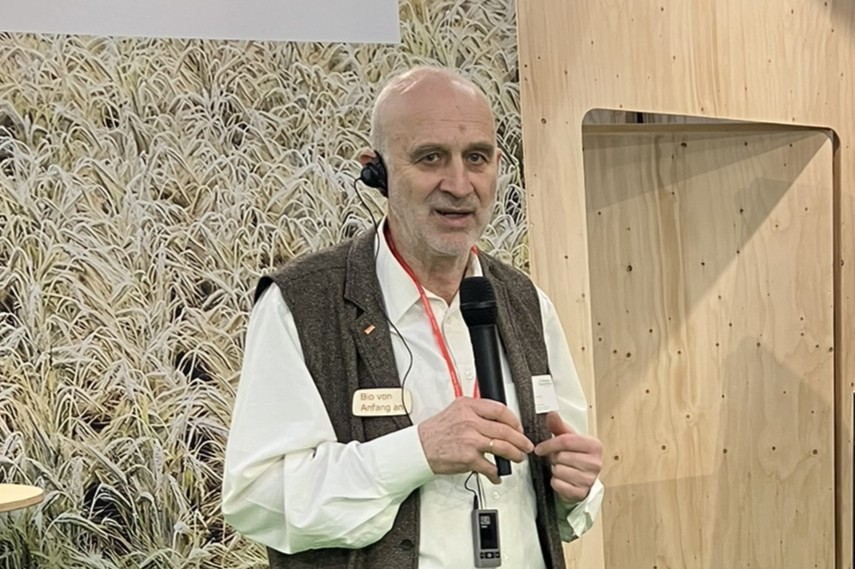
In her talk at the Organic Breeding Forum, Lena Hüttmann from IG Saatgut explained: “Although it may sound paradoxical to most consumers, it remains a reality: organic farming is dependent on conventional breeding and seed supply. There are still far from enough varieties and seeds from organic breeding.” She emphasised that it was still unclear whether conventional breeding companies would continue to guarantee GMO-free varieties and seeds even after the new regulations came into force.
This made the expansion of organic breeding all the more urgent. Following on from this, three presentations by organic plant breeders provided practical insights into variety development under organic conditions.
Polygenic tolerance in apples
Inde Sattler, an apple grower with Apfel:gut e.V., an association of independently operating fruit growers, spoke about the growing challenges in organic fruit growing caused by increased humidity and significant temperature fluctuations. She emphasised: “We need resilient systems and varieties adapted to regional conditions. CRISPR/Cas will not help us. By observing the trees on the orchards over a long period, we can determine how the trees respond to climate change.” Whilst the strategy of monogenic resistance carries the risk of resistance breakthroughs, Apfel:gut e.V. is focusing on polygenic tolerance.
This means that although a tree may be affected by various diseases, it is able to cope with them so well that it still bears fruit. “What matters to us is the vitality of the whole plant out in the field, not just in the laboratory,” the breeder emphasised, thereby summarising the general objective of organic breeders.

Variety of vegetables
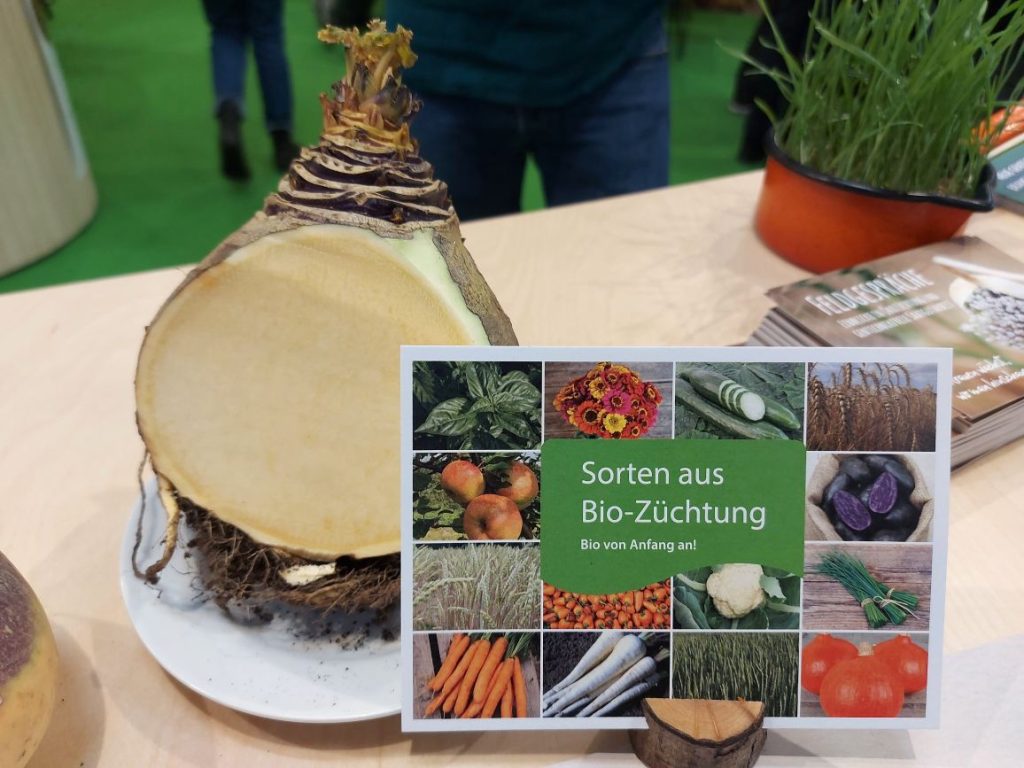
The highlight of the series of events at the stand was undoubtedly the launch event for a series of „field discussions“ that will take place this year at various breeding and seed production sites. A male and a female breeder from the Kultursaat e.V. breeding network brought their work to Biofach and displayed selection lines of a swede and a carrot. It was an unusual sight amidst the hustle and bustle of the fair, which spontaneously encouraged many visitors to stop and listen. Breeder Sebastian Vornhecke spoke about his breeding work on the Hedwig swede. He began by reviewing a wide range of swede varieties from the Czech Republic, Finland and Scotland.
The aim was to breed a red-topped swede with a good flavour. “To do this, it makes sense to start by finding a suitable parent variety. It makes little sense to try to completely alter a variety.” Using the many turnips on display, he was able to clearly demonstrate what his 10-year selection process had focused on: the uniform size of the tubers, the red top and the consistently yellow flesh – and, most importantly, the flavour. Many visitors tried a swede for the very first time at the fair and were pleasantly surprised by its mild, nutty flavour, especially when eaten raw.

Preservation of varietal characteristics
During the field discussion, breeder Johanna Fellner spoke about the conservation breeding of the Rodelika carrot. This is one of the very first varieties to be developed through organic breeding. It was bred by pioneer Dieter Bauer and has been established on the market for a good 15 years. To ensure that vegetable varieties retain their original characteristics, conservation breeding involves selecting specimens from a plant population that most closely match the variety’s profile. Seeds for propagation are then obtained only from these specimens. Johanna Fellner trained the visitors’ eyes to spot the ‘perfect’ carrot. In addition to the specific flavour, the breeder looks for a uniform conical shape and length, well-formed shoulders and a rounded end to the carrots.
The latter is also a distinguishing feature of the carrot’s ripeness. The insight into their breeding process clearly demonstrated just how different carrots can look and taste before selection – and how labour-intensive the process of filtering out the best specimens for breeding is. At the same time, both breeders were able to demonstrate what GMO-free breeding entails: holistic breeding that respects the integrity of the plant, takes place in the field, and achieves the desired outcome exclusively through selection and, where necessary, cross-breeding.

Challenges in animal breeding
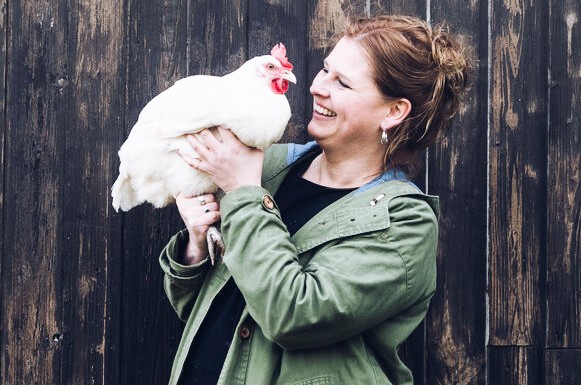
Finally, Inga Günther-Bender from Ökologische Tierzucht gGmbH (ÖTZ) spoke about the challenges facing animal breeding. These are at least as significant as those in plant breeding. Animal breeding is also severely understaffed and underfunded. Furthermore, “Large parts of the industry are not yet sufficiently aware of the risks associated with animal breeding,” the breeder clarified. Yet breeding techniques for farm animals are developing at a rapid pace.
“If guidelines are introduced that rule out these techniques, it is all the more important to address the issue in a professional and solution-oriented manner. At the same time, alternative breeding approaches must be strengthened.” She referred to the “1 Cent for Breeding” campaign, in which the organic food trade has already invested over two million euros in recent years: “This could serve as a model for other industry representatives.”
Successes of the joint stand
The presence of organic breeding at Biofach remains indispensable. The sector has still not taken this issue seriously enough, and there is too great a reliance on conventional breeding – a reliance that, in light of the deregulation of new genetic engineering techniques, must be viewed more critically than before. Breeding efforts alone cannot solve this problem. The entire value chain must address the issue of crop varieties and explore new avenues together.
What better place to start than Biofach? Those at the joint stand were pleased to have sparked interest among many visitors and held in-depth discussions with industry representatives. The inviting exhibition stand is, in the truest sense, a meeting place that offers an annual forum for in-depth exchange and the development of new ideas that advance Organically Breeding.

Photo credits: photo 8 by ÖTZ, rest by bioverita